Cyrtan
PROJECT TYPE
Business Strategy + Market Expansion
ROLE
UX & UI Designer
Product Strategy
Visual Storytelling
Product Strategy
Visual Storytelling
TEAM
CMU MIIPS Capstone Team (6 people group)
TIMELINE
2026/01 – 2026/04
Project Overview
Cyrtan Energy is a product reframing effort focused on aligning a waste-to-energy system with real customer needs.
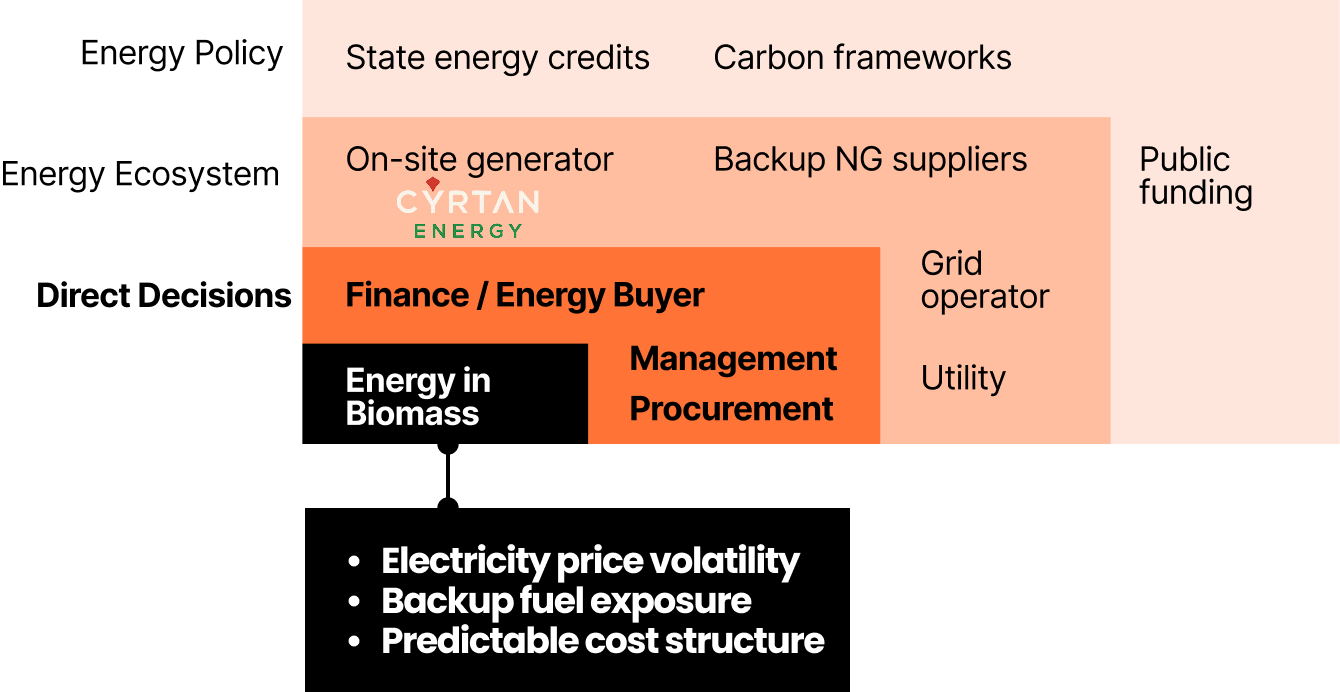
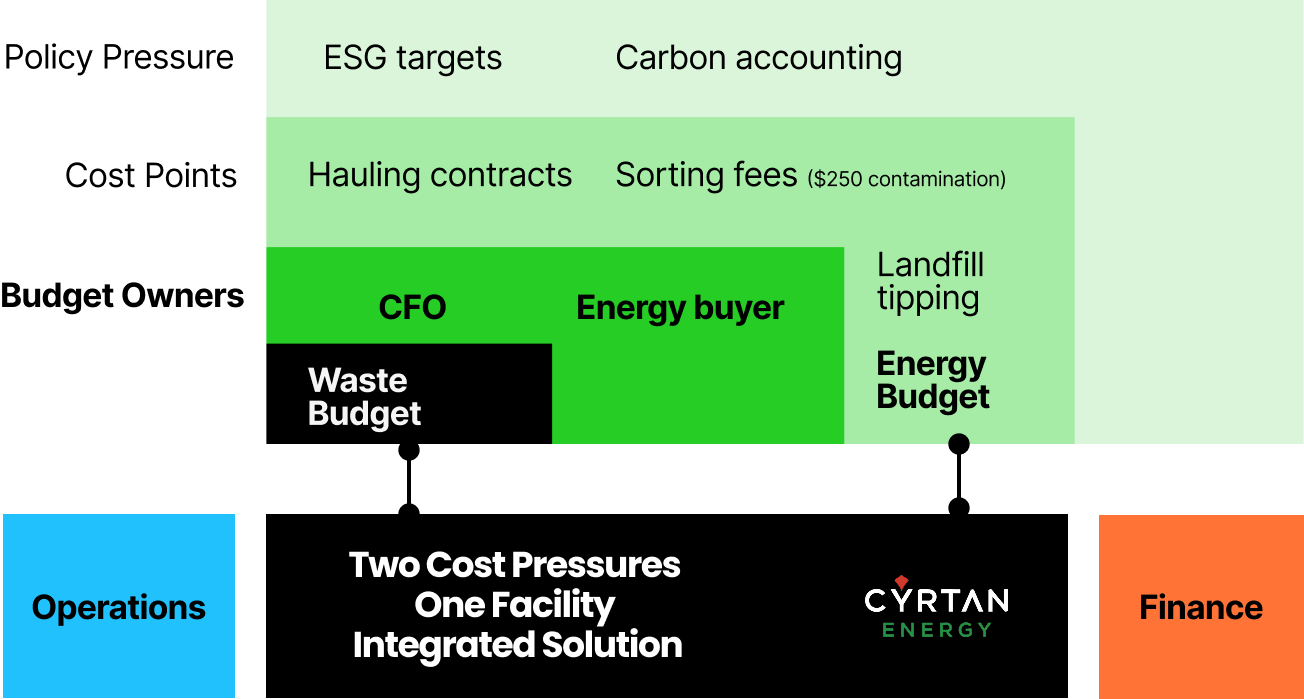
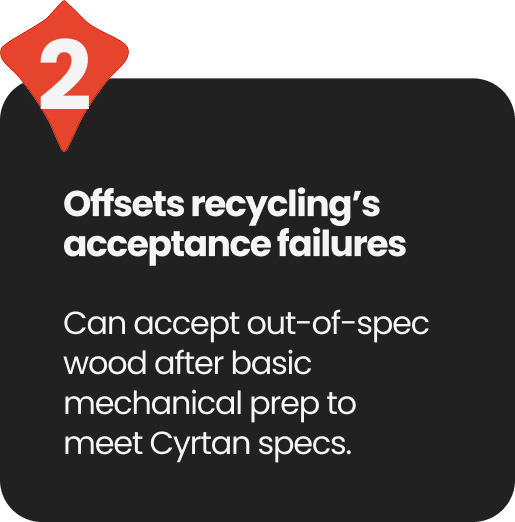
Early positioning emphasized energy generation, but research revealed a mismatch: manufacturing facilities were not actively seeking new energy solutions. Instead, their primary challenge was the cost and complexity of managing contaminated wood waste.
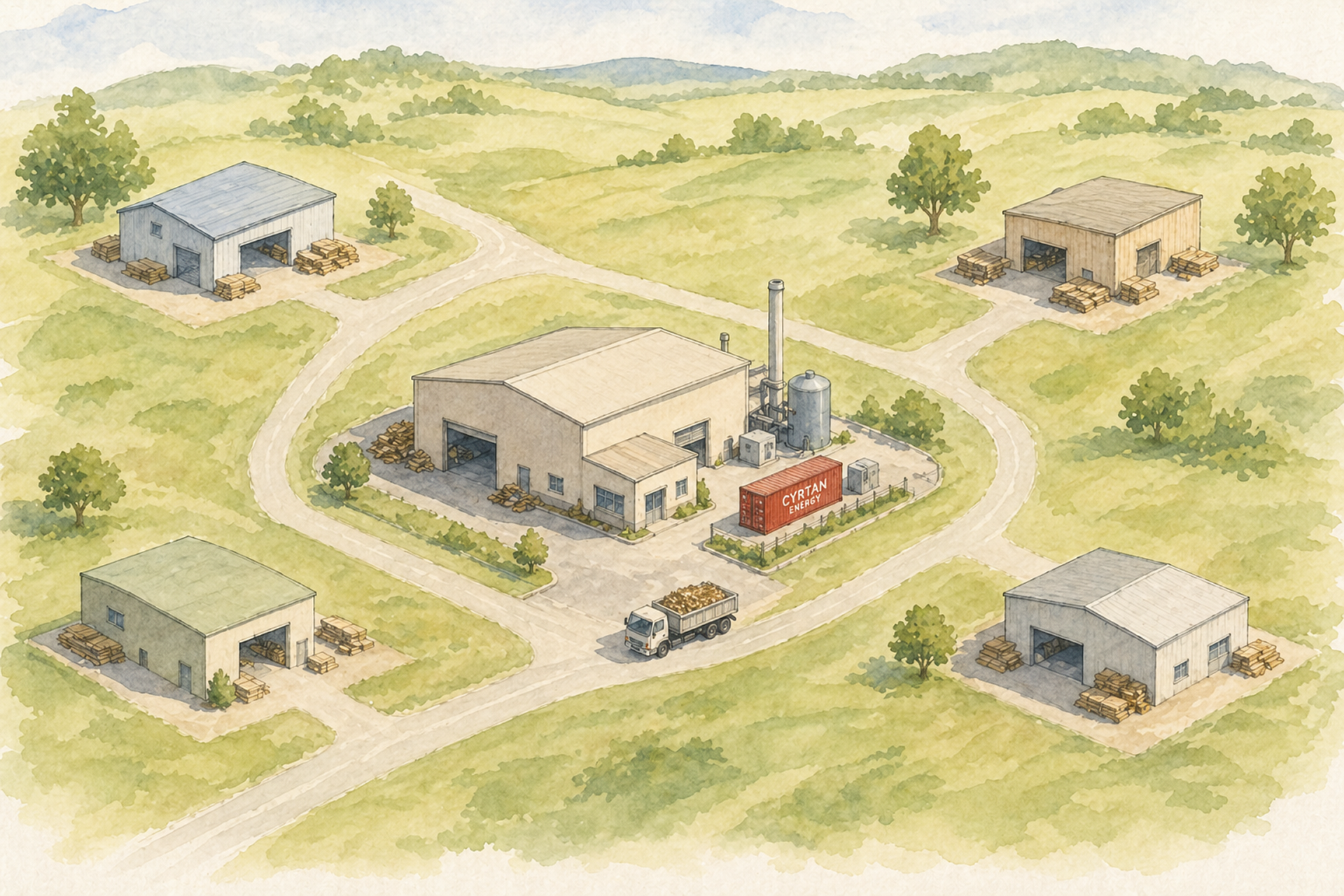
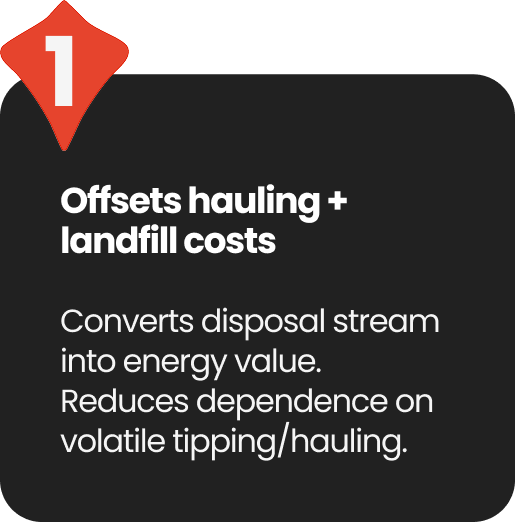
In response, Cyrtan redefined its approach. The target user shifted toward furniture finishers and similar manufacturers with high disposal pain, the value proposition moved from energy production to waste cost reduction, and the product evolved into a cluster-based Recovery Hub model.
This system aggregates waste from multiple facilities, processes it into usable feedstock, and converts it into continuous on-site energy.
This reframing transforms Cyrtan from a standalone technology into a more practical, service-oriented system—one that reduces disposal costs, simplifies operations, and creates a clearer path for adoption and scale.
Early positioning emphasized energy generation, but research revealed a mismatch: manufacturing facilities were not actively seeking new energy solutions. Instead, their primary challenge was the cost and complexity of managing contaminated wood waste.
In response, Cyrtan redefined its approach. The target user shifted toward furniture finishers and similar manufacturers with high disposal pain, the value proposition moved from energy production to waste cost reduction, and the product evolved into a cluster-based Recovery Hub model.
This system aggregates waste from multiple facilities, processes it into usable feedstock, and converts it into continuous on-site energy.
This reframing transforms Cyrtan from a standalone technology into a more practical, service-oriented system—one that reduces disposal costs, simplifies operations, and creates a clearer path for adoption and scale.






.png)